SGAC has opened applications for multiple spots for three important roles to the organisation: Co-Secretary, Web Editor and Reporter on the Communications & Public Relations (PR) Team. These positions are offer challenging, rewarding, and professional skill-building experiences.
Be a part of leading and shaping the organisation! Benefits of these positions include meeting and working with young space sector leaders from around the world, having a higher chance of receiving SGAC scholarships to attend conferences around the world,being recognised internationally as part of the organisation's leadership on the SGAC Team webpage,being invited to attend United Nations Committee on the Peaceful Uses of Outer Space meetings and other conferences as part of the official SGAC delegation,building leadership skills and other skills that are directly translatable to your career
For more details and please visit the official website of Space Generation Advisory Council( SGAC)-www.spacegeneration.org . The deadline for those positions is December 7, 2011. So, don't wait, apply now!
Friday, November 25, 2011

Sunday, June 19, 2011
Total Lunar Eclipse Observation Campaign 2011 in Nepal
The first Total Lunar Eclipse of 2011 brought great excitement among the amateur astronomers of Nepal.observe this historical eclipse,Nepal Astronomical Society(NASO), Kathmandu and Nepali Association for Astronomical Mission(NAAM) Birgunj,Nepal had organized doouble stationed observation of TLE from Nepal.before, NASO has spread the news among the nepalese through different media. " We have been busy answering the questions from the media as an live on FM radios from different parts of Nepal", said the Rishi Shah,Academician of Nepal Academy of Science and Technology (NAST) and President of NASO. We have tried to dissiminate the right information to every corner of Nepal through TVs, Radios and newspaper", explained Mr. Suresh Bhattarai, Secretary of NASO.

Through the observation from Kathmandu failed due to rain, Observers at other end had enjoyed the moments. "It was amazing to observe the moon passing deeply in the shadow of the Earth with in hrs,more interestingly to see the changes in the colour of the moon with orange to red and to black" explained Mr. Milan Rai, president of Nepali Association for Astronomical Mission(NAAM)
Birgunj,Nepal.
As we know that our solar system is a family of planets and their satellites which revolving around the sun on their orbit, so some time they come between a straight line while revolving around the sun. When the earth comes between the sun and the moon and they all are in straight path,the earth obstruct the light reaching to the moon causing shadow on it is known as lunar eclipse. Mr Rai further added, "In Birgunj the moon observation night was started from 8:00pm to the morning 7:00 am. According to local time ,the partial eclipse was begain at 12:04 a.m and total eclipse was begain at 1:06 a.m and total eclipse ends at 2:45 a.m morning at birgunj. After on wards we couldn’t recored the phases of eclipse of cloudy weather".
See you on in December, 2011!!!

Through the observation from Kathmandu failed due to rain, Observers at other end had enjoyed the moments. "It was amazing to observe the moon passing deeply in the shadow of the Earth with in hrs,more interestingly to see the changes in the colour of the moon with orange to red and to black" explained Mr. Milan Rai, president of Nepali Association for Astronomical Mission(NAAM)
Birgunj,Nepal.
As we know that our solar system is a family of planets and their satellites which revolving around the sun on their orbit, so some time they come between a straight line while revolving around the sun. When the earth comes between the sun and the moon and they all are in straight path,the earth obstruct the light reaching to the moon causing shadow on it is known as lunar eclipse. Mr Rai further added, "In Birgunj the moon observation night was started from 8:00pm to the morning 7:00 am. According to local time ,the partial eclipse was begain at 12:04 a.m and total eclipse was begain at 1:06 a.m and total eclipse ends at 2:45 a.m morning at birgunj. After on wards we couldn’t recored the phases of eclipse of cloudy weather".
See you on in December, 2011!!!
Wednesday, June 01, 2011
I am Back now!
Hello friends,
It's been more than 5 years since I stop working for this blog which is supposed to catered many aspects of life! I will be working on this blog to give a new idea of expressions as much as possible! So, if you have any creation that you want to share with us, please send your creation which will be available to the wider like minded audience through this blog :-)
Wish you all a very happy time ahead:-)
!BE HAPPY and LET OTHERS HAPPY!
It's been more than 5 years since I stop working for this blog which is supposed to catered many aspects of life! I will be working on this blog to give a new idea of expressions as much as possible! So, if you have any creation that you want to share with us, please send your creation which will be available to the wider like minded audience through this blog :-)
Wish you all a very happy time ahead:-)
!BE HAPPY and LET OTHERS HAPPY!
Saturday, November 11, 2006
MAHARA CALLS FOR UNITY AMONG EIGHT POLITICAL PARTIES FOR NEXT 10-YEAR
After signing historic agreement with the seven party alliance, Maoist spokesperson and coordinator of the Maoist talks team Krishna Bahadur Mahara has said that the unity among eight political parties should continue until the end of feudalism in the country.
Addressing a victory meet organised in Pokhara by the Maoists, after the historic agreement between the SPA and Maoists, Mahara said the eight party alliance should continue for the next 10 years at least.
Stating that the Maoists are ready to maintain the alliance for 10 years, Mahara urged other political parties not to play competitive politics during these 10 years.
"The relation of the King with the Nepali Army is not going to break with simple decisions and cosmetic reforms," he said, adding, "Therefore a long-term coalition among political parties is essential."
He also warned that monarchy could attempt to take regressive steps if political parties did not remain alert in the days to come.
The success of summit talks is the beginning of the formation of a republican Nepal and the end of monarchy, said Mahara, adding that the agreement truly demonstrated the unity of the political parties.
Mahara further warned, “If the points of agreement are not implemented honestly, it will invite catastrophe in the country.”
Addressing a victory meet organised in Pokhara by the Maoists, after the historic agreement between the SPA and Maoists, Mahara said the eight
 party alliance should continue for the next 10 years at least.
Stating that the Maoists are ready to maintain the alliance for 10 years, Mahara urged other political parties not to play competitive politics during these 10 years.
"The relation of the King with the Nepali Army is not going to break with simple decisions and cosmetic reforms," he said, adding, "Therefore a long-term coalition among political parties is essential."
He also warned that monarchy could attempt to take regressive steps if political parties did not remain alert in the days to come.
The success of summit talks is the beginning of the formation of a republican Nepal and the end of monarchy, said Mahara, adding that the agreement truly demonstrated the unity of the political parties.
Mahara further warned, “If the points of agreement are not implemented honestly, it will invite catastrophe in the country.”
Saturday, October 28, 2006
AT LEAST 4O PEOPLE KILLED IN SALYAN ACCIDENT
At least 40 people were killed and over 40 others injured when a passenger bus met with an accident near Luham Bazaar in Tribeni VDC of Salyan district in mid-western region Saturday morning.
The ill-fated bus heading for Tulsipur of Dang district from Salyan skidded some 200 meters off the road and plunged into a gorge, police sources in Dang said. Most of the victims died on the spot.
Nearly 100 people were travelling in the Ra-1-Kha 185 bus belonging to Rapti Yatayat. Local people and police officials had rescued the injured passengers. Over a dozen passengers jumped off the bus and saved their lives.
Brake failure is said to be the reason behind the accident.
The injured passengers have been taken to Ghorahi in Dang and Nepalgunj for treatment. The death toll is likely to rise as a few the injured passengers are in critical condition.
The ill-fated bus heading for Tulsipur of Dang district from Salyan skidded some 200 meters off the road and plunged into a gorge, police sources in Dang said. Most of the victims died on the spot.
Nearly 100 people were travelling in the Ra-1-Kha 185 bus belonging to Rapti Yatayat. Local people and police officials had rescued the injured passengers. Over a dozen passengers jumped off the bus and saved their lives.
Brake failure is said to be the reason behind the accident.
The injured passengers have been taken to Ghorahi in Dang and Nepalgunj for treatment. The death toll is likely to rise as a few the injured passengers are in critical condition.
THREE NEPALI WOMEN TO RUN MARATHON FOR CHARITY
Three Nepali women—Prerna Shrestha, Sworupa Khadka and Raksha Pant-- are running the US Marathons next month to raise funds for the Help Nepal Health Post in Haripurwa VDC, Sarlahi, in south-eastern Nepal.
Haripurwa VDC is a conglomerate of villages with approximately 13,000 people. The VDC does not have a health facility and the villagers have to walk long hours to the district hospital in Malangwa for minor treatments and check ups.
According to Help Nepal Network ( www.helpnepal.net), a global charity set up by Nepalis, Prerana, Sworupa and Raksha – all members of Help Nepal-- will attempt to raise at least $8,000 for the Health Post.
This summer, Help Nepal organised the US tour of the famous comedian duo, Madan Krishna Shrestha and Haribansh Acharya, and raised $10, 760.90 for the proposed 13-bed Sarlahi Health Post. The total initial estimated cost for the construction of the Health Post is approximately $19,000.
According to the organisers, Prerana will run the ING New York City Marathon on November 5, and Sworupa and Raksha will run the Philadelphia Marathon on November 19.
A PhD candidate in Neuroscience at The Rockefeller University in New York, Prerna graduated from Bates College in 2003 with a Bachelors of Science degree in Biological Chemistry. She also serves in the executive committee of International Nepali Biomedical Society (INBS).
Raksha works in McKinsey & Company's Asset Management Research Practice in NYC. Raised in Thailand and the Philippines, she graduated from Bryn Mawr College in 2002 with an Economics major/Math minor. Raksha and friends have also launched "Badi ko Sathi", a non-profit with the goal of educating Badi children and raising societal awareness about the Badi plight.
Sworupa works as an Assistant Operations Manager at Mellon Financial Corporation in its Consulting and Investment Solutions group. She graduated from University of Bridgeport, CT in 2001 where she served as a president of The Himalayan Club, a student organization. She is also the founding member of XMA (Xavier's Mary's Alumni Association).
"I urge all the Nepalis—living in the US and elsewhere—to participate in and spread the word about Help Nepal's "One dollar a month" online donation program and make it one of the most inclusive, therefore one of the most powerful donation tools to make a difference in Nepal," said Shailesh Gongal, chairman of Help Nepal Network USA. "Just imagine if 100,000 Nepalis living in the US give a dollar a month, we will be raising USD 1.2 million a year," he added.
The organisers said they have already raised over 1,300 US dollars so far in support of the cause championed by three courageous Nepali women. They said they welcome online contributions at https://secure.groundspring.org/dn/index.php?aid=5012
Set up in 1999, Help Nepal Network now has its chapters in nearly one dozen countries and is the largest charitable network of the Nepali diaspora. It has already provided assistance to implement projects mainly in education and health sectors targeting rural and underprivileged communities in Nepal.
Haripurwa VDC is a conglomerate of villages with approximately 13,000 people. The VDC does not have a health facility and the villagers have to walk long hours to the district hospital in Malangwa for minor treatments and check ups.
According to Help Nepal Network ( www.helpnepal.net), a global charity set up by Nepalis, Prerana, Sworupa and Raksha – all members of Help Nepal-- will attempt to raise at least $8,000 for the Health Post.
This summer, Help Nepal organised the US tour of the famous comedian duo, Madan Krishna Shrestha and Haribansh Acharya, and raised $10, 760.90 for the proposed 13-bed Sarlahi Health Post. The total initial estimated cost for the construction of the Health Post is approximately $19,000.
According to the organisers, Prerana will run the ING New York City Marathon on November 5, and Sworupa and Raksha will run the Philadelphia Marathon on November 19.
A PhD candidate in Neuroscience at The Rockefeller University in New York, Prerna graduated from Bates College in 2003 with a Bachelors of Science degree in Biological Chemistry. She also serves in the executive committee of International Nepali Biomedical Society (INBS).
Raksha works in McKinsey & Company's Asset Management Research Practice in NYC. Raised in Thailand and the Philippines, she graduated from Bryn Mawr College in 2002 with an Economics major/Math minor. Raksha and friends have also launched "Badi ko Sathi", a non-profit with the goal of educating Badi children and raising societal awareness about the Badi plight.
Sworupa works as an Assistant Operations Manager at Mellon Financial Corporation in its Consulting and Investment Solutions group. She graduated from University of Bridgeport, CT in 2001 where she served as a president of The Himalayan Club, a student organization. She is also the founding member of XMA (Xavier's Mary's Alumni Association).
"I urge all the Nepalis—living in the US and elsewhere—to participate in and spread the word about Help Nepal's "One dollar a month" online donation program and make it one of the most inclusive, therefore one of the most powerful donation tools to make a difference in Nepal," said Shailesh Gongal, chairman of Help Nepal Network USA. "Just imagine if 100,000 Nepalis living in the US give a dollar a month, we will be raising USD 1.2 million a year," he added.
The organisers said they have already raised over 1,300 US dollars so far in support of the cause championed by three courageous Nepali women. They said they welcome online contributions at https://secure.groundspring.org/dn/index.php?aid=5012
Set up in 1999, Help Nepal Network now has its chapters in nearly one dozen countries and is the largest charitable network of the Nepali diaspora. It has already provided assistance to implement projects mainly in education and health sectors targeting rural and underprivileged communities in Nepal.
Monday, August 14, 2006
SPECIAL RELATIVITY THEORY
The special theory of relativity was proposed in 1905 by Albert Einstein in his article "On the Electrodynamics of Moving Bodies." Some three centuries earlier, Galileo's principle of relativity had stated that all uniform motion was relative, and that there was no absolute and well-defined state of rest; a person on the deck of a ship may be at rest in his opinion, but someone observing from the shore would say that he was moving. Einstein's theory combines Galilean relativity with the postulate that all observers will always measure the speed of light to be the same no matter what their state of uniform linear motion is.
This theory has a variety of surprising consequences that seem to violate common sense, but which have been verified experimentally. Special relativity overthrows Newtonian notions of absolute space and time by stating that distance and time depend on the observer, and that time and space are perceived differently, depending on the observer. It yields the equivalence of matter and energy, as expressed in the famous equation E=mc2, where c is the speed of light. Special relativity agrees with Newtonian mechanics in their common realm of applicability, in experiments in which all velocities are small compared to the speed of light.
The theory was called "special" because it applies the principle of relativity only to inertial frames. Einstein developed general relativity to apply the principle generally, that is, to any frame, and that theory includes the effects of gravity. Special relativity doesn't account for gravity, but it can deal with accelerations.
Although special relativity makes relative some quantities, such as time, that we would have imagined to be absolute based on everyday experience, it also makes absolute some others that we would have thought were relative. In particular, it states that the speed of light is the same for all observers, even if they are in motion relative to one another. Special relativity reveals that c is not just the velocity of a certain phenomenon -- light -- but rather a fundamental feature of the way space and time are tied together. In particular, special relativity states that it is impossible for any material object to travel as fast as light.
This theory has a variety of surprising consequences that seem to violate common sense, but which have been verified experimentally. Special relativity overthrows Newtonian notions of absolute space and time by stating that distance and time depend on the observer, and that time and space are perceived differently, depending on the observer. It yields the equivalence of matter and energy, as expressed in the famous equation E=mc2, where c is the speed of light. Special relativity agrees with Newtonian mechanics in their common realm of applicability, in experiments in which all velocities are small compared to the speed of light.
The theory was called "special" because it applies the principle of relativity only to inertial frames. Einstein developed general relativity to apply the principle generally, that is, to any frame, and that theory includes the effects of gravity. Special relativity doesn't account for gravity, but it can deal with accelerations.
Although special relativity makes relative some quantities, such as time, that we would have imagined to be absolute based on everyday experience, it also makes absolute some others that we would have thought were relative. In particular, it states that the speed of light is the same for all observers, even if they are in motion relative to one another. Special relativity reveals that c is not just the velocity of a certain phenomenon -- light -- but rather a fundamental feature of the way space and time are tied together. In particular, special relativity states that it is impossible for any material object to travel as fast as light.
ABOUT THE SUPERNOVA
A supernova is a stellar explosion that produces an extremely bright object made of plasma that declines to invisibility over weeks or months. There are several different types of supernovae and two possible routes to their formation. A massive star may cease to generate fusion energy from fusing the nuclei of atoms in its core and collapse inward under the force of its own gravity to form a neutron star or black hole, or a white dwarf star may accumulate material from a companion star until it nears its Chandrasekhar limit and undergoes runaway nuclear fusion in its interior, completely disrupting it (note that this should not be confused with a surface thermonuclear explosion on a white dwarf called a nova). In either case, the resulting supernova explosion expels much or all of the stellar material with great force.
The explosion drives a blast wave into the surrounding space, forming a supernova remnant. One famous example of this process is the remnant of SN 1604, shown to the right.
"Nova" (pl. novae) is Latin for "new", referring to what appears to be a very bright new star shining in the celestial sphere; the prefix "super" distinguishes this from an ordinary nova, which also involves a star increasing in brightness, though to a lesser extent and through a different mechanism. However, it is misleading to consider a supernova as a new star, because it really represents the death of a star (or at least its radical transformation into something else).
The explosion drives a blast wave into the surrounding space, forming a supernova remnant. One famous example of this process is the remnant of SN 1604, shown to the right.
"Nova" (pl. novae) is Latin for "new", referring to what appears to be a very bright new star shining in the celestial sphere; the prefix "super" distinguishes this from an ordinary nova, which also involves a star increasing in brightness, though to a lesser extent and through a different mechanism. However, it is misleading to consider a supernova as a new star, because it really represents the death of a star (or at least its radical transformation into something else).
Friday, May 05, 2006
LOCAL ADMINISTRATION LIFTS CURFEW AFTER FIVE YEARS
The local administration removed curfew orders in Dang district after five years citing improvement in the security situation of the district.
The local administration had been imposing nighttime curfew order in the district since November 26, 2001 following the Maoist attack at all government installations in Ghorai, the district headquarter of Dang district on November 23.
Maoists launched major attack on Ghorai, the district headquarter of Dang district following a break in a four month truce.
Talking to Nepalnews, acting chief district officer of the district, Sundar Raj Aryal, informed that they removed the curfew after five years keeping in view the recent political development of the country and improvement in the security situation.
Local administrations in various districts have been imposing curfew orders in the night to avoid probable attack of the Maoists.
The government on Wednesday removed terrorist tag and red corner notice from Maoists and reciprocated the unilateral ceasefire announced by the Maoists.
The local administration had been imposing nighttime curfew order in the district since November 26, 2001 following the Maoist attack at all government installations in Ghorai, the district headquarter of Dang district on November 23.
Maoists launched major attack on Ghorai, the district headquarter of Dang district following a break in a four month truce.
Talking to Nepalnews, acting chief district officer of the district, Sundar Raj Aryal, informed that they removed the curfew after five years keeping in view the recent political development of the country and improvement in the security situation.
Local administrations in various districts have been imposing curfew orders in the night to avoid probable attack of the Maoists.
The government on Wednesday removed terrorist tag and red corner notice from Maoists and reciprocated the unilateral ceasefire announced by the Maoists.
MAOISTS AGREE TO SIT ON PEACE TALK
A day after the government announced a ceasefire, the Maoists have welcomed it and agreed to sit for peace negotiations with the government led by Seven Party Alliance (SPA).
In a statement issued on Thursday, chairman of the CPN (Maoist), Prachanda alias Pushpa Kamal Dahal, said his party is ready to sit for talks with the government as per the 12-point understanding reached with the SPA.
Prachanda further said his party had already handed over a "code of conduct" – to be observe d by both the sides—to the government and expressed hope that it would be implemented sincerely.
The Maoist supremo warned that his party’s decision to sit for negotiations should not been seen as ‘war-weariness’ or ‘hurry to join the open politics.’ “We are prepared to fight in any front till the end for the sake of Nepal and the Nepalis,” he said.
In his statement, Prachanda expressed hope that the forthcoming negotiations would not turn into a failure as was the case with the previous two round of negotiations and that interim statute and interim government would be formed by dissolving the reinstated parliament, constitution and the government. Prachanda said the interim government would take the lead of the entire elections process for what he called the ‘unconditional constituent assembly.’ “Ultimately, it is the political consciousness and continued agitation of the great Nepali people in order to ensure safe-landing of this process,” he added.
Prachanda alleged the government of USA of trying to push Nepal towards eternal war and conflict in Nepal—situated between two giants China and India—in order to fulfill its “imperial interests.” He also claimed that the recent visit of US Assistant Secretary for South Asia, Richard Boucher, was directed in that direction.
Describing the present situation in the country as transitional, Prachanda said the country was heading towards a republic.
On Wednesday, the newly formed government led by G P Koirala declared ceasefire and decided to withdraw terrorist tag and ‘Red Corner’ notices against the CPN (Maoist) and its leadership.
In a statement issued on Thursday, chairman of the CPN (Maoist), Prachanda alias Pushpa Kamal Dahal, said his party is ready to sit for talks with the government as per the 12-point understanding reached with the SPA.
Prachanda further said his party had already handed over a "code of conduct" – to be observe
 d by both the sides—to the government and expressed hope that it would be implemented sincerely.
The Maoist supremo warned that his party’s decision to sit for negotiations should not been seen as ‘war-weariness’ or ‘hurry to join the open politics.’ “We are prepared to fight in any front till the end for the sake of Nepal and the Nepalis,” he said.
In his statement, Prachanda expressed hope that the forthcoming negotiations would not turn into a failure as was the case with the previous two round of negotiations and that interim statute and interim government would be formed by dissolving the reinstated parliament, constitution and the government. Prachanda said the interim government would take the lead of the entire elections process for what he called the ‘unconditional constituent assembly.’ “Ultimately, it is the political consciousness and continued agitation of the great Nepali people in order to ensure safe-landing of this process,” he added.
Prachanda alleged the government of USA of trying to push Nepal towards eternal war and conflict in Nepal—situated between two giants China and India—in order to fulfill its “imperial interests.” He also claimed that the recent visit of US Assistant Secretary for South Asia, Richard Boucher, was directed in that direction.
Describing the present situation in the country as transitional, Prachanda said the country was heading towards a republic.
On Wednesday, the newly formed government led by G P Koirala declared ceasefire and decided to withdraw terrorist tag and ‘Red Corner’ notices against the CPN (Maoist) and its leadership.
Monday, April 24, 2006
MOBILE PHONES START TO RING AGAIN
The government resumed the mobile phone services that were snapped since Saturday afternoon in Kathmandu from Tuesday morning.
The government had disconnected both post-paid and pre-paid mobile services of Nepal Telecom (NT) and Spice Nepal Private Limited from Saturday afternoon to thwart the pro-democracy movement of the country.
The mobile phones went down as tens of thousands of people took to the Kathmandu streets on Saturday defying curfew orders and denouncing Friday's royal proclamation.
Telecom employees had also been carrying out protests demanding immediate resumption of services.
This is the fourth time the government had snapped the mobile phone services after the February 1, 2005, royal takeover. NT officials said that net loss of Nepal’s giant telecommunication service provider has grown to Rs. 2.5 billion due to frequent disruption of services.
The NT has distributed around 500,000 mobile phone lines across the country-- nearly half of the mobile lines have been distributed to in the Kathmandu Valley.
The government had disconnected both post-paid and pre-paid mobile services of Nepal Telecom (NT) and Spice Nepal Private Limited from Saturday afternoon to thwart the pro-democracy movement of the country.
The mobile phones went down as tens of thousands of people took to the Kathmandu streets on Saturday defying curfew orders and denouncing Friday's royal proclamation.
Telecom employees had also been carrying out protests demanding immediate resumption of services.
This is the fourth time the government had snapped the mobile phone services after the February 1, 2005, royal takeover. NT officials said that net loss of Nepal’s giant telecommunication service provider has grown to Rs. 2.5 billion due to frequent disruption of services.
The NT has distributed around 500,000 mobile phone lines across the country-- nearly half of the mobile lines have been distributed to in the Kathmandu Valley.
KING GYANENDRA RESTORE THE DISSOLVE PARLIAMENT
In a major political breakthrough, His Majesty King Gyanendra restored the dissolved House of Representatives through a royal proclamation on Tuesday.
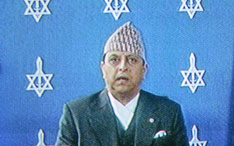
In his televised address to the nation later this evening, the King stated that the lower house of parliament dissolved in May 2002 has been reinstated as per the spirit of the ongoing people's movement and the roadmap of the opposition seven-party alliance (SPA).
The King also called the session of the parliament on Friday (April 28) at 13:00 p.m. at the parliament building in Singh Durbar.
He expressed hope that the SPA would become able to establish permanent peace and national unity and uphold total democracy in the country and extended his condolence to those who lost their lives during the ongoing people's movement, wishing speedy recovery of those injured.
Sovereign and executive power rest on the Nepali people as per the constitution of the Kingdom, the King said.
Reinstatement of the parliament has been on of the main demand of the SPA that has been carrying out nationwide general strike since last 19 days.

In his televised address to the nation later this evening, the King stated that the lower house of parliament dissolved in May 2002 has been reinstated as per the spirit of the ongoing people's movement and the roadmap of the opposition seven-party alliance (SPA).
The King also called the session of the parliament on Friday (April 28) at 13:00 p.m. at the parliament building in Singh Durbar.
He expressed hope that the SPA would become able to establish permanent peace and national unity and uphold total democracy in the country and extended his condolence to those who lost their lives during the ongoing people's movement, wishing speedy recovery of those injured.
Sovereign and executive power rest on the Nepali people as per the constitution of the Kingdom, the King said.
Reinstatement of the parliament has been on of the main demand of the SPA that has been carrying out nationwide general strike since last 19 days.
PARTIES GEAR UP FOR TUESDAY'S MASS DEMONSTRATIONS,PROFESSIONAL PLEDGE ACTIVE PARTICIPATION
The seven-party alliance (SPA) has completed preparations for the mass demonstrations in Ring Road, Kathmandu, on Tuesday, as various professional groups and trade unions pledged active participation in the protests.
Separate meetings of the seven parties on Monday decided to mobilise their central leaders to lead the rallies at different places. A meeting of the Standing Committee (SC) of the CPN (UML) decided to send all SC members to lead the peaceful rallies while the Central Working Committee meetings of Nepali Congress (NC) and NC (Democratic) also decided to deploy senior central committee members to coordinate the rallies. Four other parties also made similar decisions.
The parties also urged their cadres to mobilise the masses in a peaceful way and keep and eye on the ‘government-sanctioned vigilantes’ who could provoke violence during the demonstrations. Issuing separate statements after the meetings, the parties also appealed to the general people and professional organisations to actively participate in the demonstrations against the royal proclamation of Friday.
As per the decision of the meeting of the Central People’s Movement Coordination Committee held on Sunday NC president Girija Prasad Koirala will address a mass gathering at Narayangopal Chowk, UML general secretary Madhav Kumar Nepal a mass meeting in Kalanki, NC (D) president Sher Bahadur Deuba at Gongabu and Amik Sherchan at Satdobato. Similarly, Nepal Workers and Peasants Party chairman Narayan Bijukchhe, Nepal Sadbhawana Party (Anandi Devi) vice-chairman Bharat Bimal Yadav and United Left Front’s Bishnu Bahadur Manahandhar will address the mass meetings at Koteshwor, Sitapaila and Chabahil respectively.
The demonstrations will be carried out from interior parts of the city and along the stretch of Ring Road from 12:00 p.m., which will converge into mass meetings.
In a show of strength, the SPA has vowed to bring as many as 2 million people in the streets of Kathmandu. Mass demonstrations will be organised in all cities and towns around the country on Tuesday, according to the parties.
Meanwhile, a meeting of the eight student organisations appealed to all students in the Kathmandu Valley and outside to leave their studies for one day and actively join in the pro-democracy demonstrations on Tuesday.
Expressing full support to the ongoing movement of the parties, various professional organisations and trade unions have pledged active involvement in Tuesday’s mass demonstrations.
The Professionals Alliance for Peace and Democracy (PAPAD) asked all organisations associated with it to join in the peaceful demonstration. A statement issued by PAPAD today said doctors, engineers, lawyers, teachers and other professionals would join in the rallies.
Similarly, Nepal Government Employees Union, National Private and Boarding Schools Organisation Nepal (N-PABSON), Nepal Trade Union, Nepal Trade Union Congress and G-Font have also asked their members to participate in the rallies.
In the same manner, Nepal Doctors Association and the Nursing Association in separate statements said volunteers would be stationed at various places to provide treatment to injured persons as there is a possibility of use of force by the security forces during the demonstrations.
Separate meetings of the seven parties on Monday decided to mobilise their central leaders to lead the rallies at different places. A meeting of the Standing Committee (SC) of the CPN (UML) decided to send all SC members to lead the peaceful rallies while the Central Working Committee meetings of Nepali Congress (NC) and NC (Democratic) also decided to deploy senior central committee members to coordinate the rallies. Four other parties also made similar decisions.
The parties also urged their cadres to mobilise the masses in a peaceful way and keep and eye on the ‘government-sanctioned vigilantes’ who could provoke violence during the demonstrations. Issuing separate statements after the meetings, the parties also appealed to the general people and professional organisations to actively participate in the demonstrations against the royal proclamation of Friday.
As per the decision of the meeting of the Central People’s Movement Coordination Committee held on Sunday NC president Girija Prasad Koirala will address a mass gathering at Narayangopal Chowk, UML general secretary Madhav Kumar Nepal a mass meeting in Kalanki, NC (D) president Sher Bahadur Deuba at Gongabu and Amik Sherchan at Satdobato. Similarly, Nepal Workers and Peasants Party chairman Narayan Bijukchhe, Nepal Sadbhawana Party (Anandi Devi) vice-chairman Bharat Bimal Yadav and United Left Front’s Bishnu Bahadur Manahandhar will address the mass meetings at Koteshwor, Sitapaila and Chabahil respectively.
The demonstrations will be carried out from interior parts of the city and along the stretch of Ring Road from 12:00 p.m., which will converge into mass meetings.
In a show of strength, the SPA has vowed to bring as many as 2 million people in the streets of Kathmandu. Mass demonstrations will be organised in all cities and towns around the country on Tuesday, according to the parties.
Meanwhile, a meeting of the eight student organisations appealed to all students in the Kathmandu Valley and outside to leave their studies for one day and actively join in the pro-democracy demonstrations on Tuesday.
Expressing full support to the ongoing movement of the parties, various professional organisations and trade unions have pledged active involvement in Tuesday’s mass demonstrations.
The Professionals Alliance for Peace and Democracy (PAPAD) asked all organisations associated with it to join in the peaceful demonstration. A statement issued by PAPAD today said doctors, engineers, lawyers, teachers and other professionals would join in the rallies.
Similarly, Nepal Government Employees Union, National Private and Boarding Schools Organisation Nepal (N-PABSON), Nepal Trade Union, Nepal Trade Union Congress and G-Font have also asked their members to participate in the rallies.
In the same manner, Nepal Doctors Association and the Nursing Association in separate statements said volunteers would be stationed at various places to provide treatment to injured persons as there is a possibility of use of force by the security forces during the demonstrations.
DEMOSTRATION CONTINUE,OVER 16 PEOPLE KILLED DURING THE DEMONSTRATION,TU POSTPONE ITS EXAM
Pro-democracy activists have continued to defy the curfew orders imposed by the local administrations and continued demonstrations demanding restoration of complete democracy in the country, on Monday, the 19th day of the indefinite general strike called by the seven party alliance (SPA).
According to latest reports, pro-democracy activists carried out protest rallies in Chabahil, Gongabu, Patan, Bhaktapur, Narayangopal Chowk, Kalanki and other places calling for people to join the protest programme of SPA on Tuesday.
According to Nepal FM, a private FM station, over 15 people were injured when police baton charged and used tear gas shells to disperse the protestors near Narayan Gopal Chowk.
Demonstrations were going on in Chabahil, Gongabu, Kalanki, Mangalbazar of Patan, Tahachal and Bhaktapur areas at 2:30 p.m.
The SPA that is planning to hold a major showdown in the capital on Tuesday is organizing various programmes for the publicity of the Tuesday’s protest programme.
Sunday’s meeting of the Central People’s Movement Coordination Committee announced to stage a Ring Road-centered peaceful demonstrations in Kathmandu and protest rallies in all cities and towns around the country on Tuesday.
Top leaders of the SPA will address the rallies.
Likewise, FM reports said rallies and protests continued in major towns in various districts across the country on Monday as well.
A report from Pokhara said various professionals including teachers, students, legal practitioners, health workers, human rights activists and political parties organised separate rallies from different parts of the city.
In Biratnagar, students and party activists organised rallies. No vehicles plied on the roads.
In Nepalgunj, political workers, teachers, government employees, women, hotel workers and legal practitioners took part in the rally.
Likewise, demonstrations were held in Butwal, Bhairahawa and Rupandehi districts.
There have been no reports of violence till 2:30 p.m.
The SPA has decided to continue their protest programme even after King Gyanendra, in the royal proclamation on Friday, said he had returned the executive power to the people as per the Article 35 of the Constitution of the Kingdom of Nepal and asked the agitating seven-party alliance to recommend a name for the Prime Minister.
According to reports, 14 protestors were killed and 5,000 injured till Sunday in course of the ongoing pro-democracy movement of the country.
Meanwhile, following the political unrest in the country, the Tribhuvan University (TU) postponed all exams of Bachelor level 2nd year until further notice.
In a notice issued by the exam control office of the TU, the TU postponed the examination of all faculties – Humanities, Education, Science, Law and Commerce slated from May 4.
TU has already postponed the 3rd year exams of the same level.
According to latest reports, pro-democracy activists carried out protest rallies in Chabahil, Gongabu, Patan, Bhaktapur, Narayangopal Chowk, Kalanki and other places calling for people to join the protest programme of SPA on Tuesday.
According to Nepal FM, a private FM station, over 15 people were injured when police baton charged and used tear gas shells to disperse the protestors near Narayan Gopal Chowk.
Demonstrations were going on in Chabahil, Gongabu, Kalanki, Mangalbazar of Patan, Tahachal and Bhaktapur areas at 2:30 p.m.
The SPA that is planning to hold a major showdown in the capital on Tuesday is organizing various programmes for the publicity of the Tuesday’s protest programme.
Sunday’s meeting of the Central People’s Movement Coordination Committee announced to stage a Ring Road-centered peaceful demonstrations in Kathmandu and protest rallies in all cities and towns around the country on Tuesday.
Top leaders of the SPA will address the rallies.
Likewise, FM reports said rallies and protests continued in major towns in various districts across the country on Monday as well.
A report from Pokhara said various professionals including teachers, students, legal practitioners, health workers, human rights activists and political parties organised separate rallies from different parts of the city.
In Biratnagar, students and party activists organised rallies. No vehicles plied on the roads.
In Nepalgunj, political workers, teachers, government employees, women, hotel workers and legal practitioners took part in the rally.
Likewise, demonstrations were held in Butwal, Bhairahawa and Rupandehi districts.
There have been no reports of violence till 2:30 p.m.
The SPA has decided to continue their protest programme even after King Gyanendra, in the royal proclamation on Friday, said he had returned the executive power to the people as per the Article 35 of the Constitution of the Kingdom of Nepal and asked the agitating seven-party alliance to recommend a name for the Prime Minister.
According to reports, 14 protestors were killed and 5,000 injured till Sunday in course of the ongoing pro-democracy movement of the country.
Meanwhile, following the political unrest in the country, the Tribhuvan University (TU) postponed all exams of Bachelor level 2nd year until further notice.
In a notice issued by the exam control office of the TU, the TU postponed the examination of all faculties – Humanities, Education, Science, Law and Commerce slated from May 4.
TU has already postponed the 3rd year exams of the same level.
ONE SOLDIER AND FIVE MAOISTS KILLED IN CHAUTARA ATTACK
At least five Maoists and one solider were killed during a clash between Maoists and security forces at Chautara of Sindupalchowk district on Sunday.
According to security sources, Maoists launched simultaneous attacks on the Royal Nepalese Army’s Naya Srinath Battalion, security forces deployed nearby to guard the repeater tower of Nepal Telecom in Chautara, District Administration Office and district jail on Sunday night.
Officials at the Directorate of Public Relations (DPR) of Royal Nepalese Army (RNA) said that the clash that started at around 9 p.m. on Sunday evening continued till 4.15 a.m. Monday morning.
Security forces Monday morning recovered five bodies of Maoists while a soldier was killed in the attack, the official added.
He informed that Maoists bombed some government offices during the incident. However details were not immediately available.
A telecommunication tower was destroyed in the attack.
Roads leading to the district headquarters were blocked and Maoist militia were seen in large numbers at different places, reports quoted locals as saying.
Details are still awaited.
According to security sources, Maoists launched simultaneous attacks on the Royal Nepalese Army’s Naya Srinath Battalion, security forces deployed nearby to guard the repeater tower of Nepal Telecom in Chautara, District Administration Office and district jail on Sunday night.
Officials at the Directorate of Public Relations (DPR) of Royal Nepalese Army (RNA) said that the clash that started at around 9 p.m. on Sunday evening continued till 4.15 a.m. Monday morning.
Security forces Monday morning recovered five bodies of Maoists while a soldier was killed in the attack, the official added.
He informed that Maoists bombed some government offices during the incident. However details were not immediately available.
A telecommunication tower was destroyed in the attack.
Roads leading to the district headquarters were blocked and Maoist militia were seen in large numbers at different places, reports quoted locals as saying.
Details are still awaited.
Tuesday, April 18, 2006
LEADERS ARE INVITED FOR DISCUSSION BY KING
His Majesty King Gyanendra granted audience to former Prime Ministers Krishna Prasad Bhattarai and Surya Bahadur Thapa at the Naryanhity Royal Palace as seven opposition political parties continued their agitation for ‘total democracy’ on12th straight day on Monday.
Talking to reporters after the royal audience, Bhattarai said, “The process of dialogue has started. Democracy will certainly return in the country.”
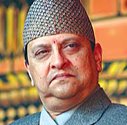
The veteran Congress leader who is out of active politics for sometime said he was against the idea of election to the constituent assembly as well as the roadmap of the seven opposition political parties for ‘total democracy’. He said his interaction with the King was focussed on how the constitution of the 1990 could be activated.
Asked if the King was ready to cede power, Bhattarai remarked in his token light-hearted manner, “No one in power would want to give up power.”
He also made clear that he was a royalist. “I am a royalist. I am here to listen to what the King has to say,” he said before entering the palace.
Meanwhile, talking to journalists after the royal audience former Prime Minister and chairman of the Rastriya Janashakti Party (RJP), Surya Bahadur Thapa, said, he informed His Majesty about the current scenario of the country.
Asked whether he will be the next Prime Minister, Thapa said, the present need of the country is to address current problems not the issue of post.
Thapa also served the post of Prime Minister for a term after the King sacked elected Prime Minister Sher Bahadur Deuba on October 2002. However, RJP is stressing the need of consensus among all constitutional forces (the King and political parties) to resolve current political stalemate of the country.
The King appointed three Prime Ministers since October 2001 to February 1, 2005 before forming the cabinet under his chairmanship.
The King had given separate audiences to cabinet vice chairmen and the ambassadors of India, United States and China on Sunday. Reports said the current political crisis in Nepal and its possible outlet was discussed in the meetings.
Indian Ambassador to Nepal Shiv Shankar Mukharjee, who received royal audience on Sunday, called on Nepali Congress (NC) President Girija Prasad Koirala on Monday morning.
According to, NC sources, the duo discussed about the royal audience and current political situation of the country.
King Gyanendra has called upon all political parties to join in a dialogue to bear the responsibility of activating the multiparty democratic polity and contribute towards the same in his message on the occasion of Nepali New year on Friday.
International communities have been pressurizing the King to initiate dialogue with the seven political parties to resolve the present problems of the country. But it is not clear whether the monarch will call the seven agitating political parties for talks or not.
Talking to reporters after the royal audience, Bhattarai said, “The process of dialogue has started. Democracy will certainly return in the country.”

The veteran Congress leader who is out of active politics for sometime said he was against the idea of election to the constituent assembly as well as the roadmap of the seven opposition political parties for ‘total democracy’. He said his interaction with the King was focussed on how the constitution of the 1990 could be activated.
Asked if the King was ready to cede power, Bhattarai remarked in his token light-hearted manner, “No one in power would want to give up power.”
He also made clear that he was a royalist. “I am a royalist. I am here to listen to what the King has to say,” he said
 before entering the palace.
Meanwhile, talking to journalists after the royal audience former Prime Minister and chairman of the Rastriya Janashakti Party (RJP), Surya Bahadur Thapa, said, he informed His Majesty about the current scenario of the country.
Asked whether he will be the next Prime Minister, Thapa said, the present need of the country is to address current problems not the issue of post.
Thapa also served the post of Prime Minister for a term after the King sacked elected Prime Minister Sher Bahadur Deuba on October 2002. However, RJP is stressing the need of consensus among all constitutional forces (the King and political parties) to resolve current political stalemate of the country.
The King appointed three Prime Ministers since October 2001 to February 1, 2005 before forming the cabinet under his
 chairmanship.
The King had given separate audiences to cabinet vice chairmen and the ambassadors of India, United States and China on Sunday. Reports said the current political crisis in Nepal and its possible outlet was discussed in the meetings.
Indian Ambassador to Nepal Shiv Shankar Mukharjee, who received royal audience on Sunday, called on Nepali Congress (NC) President Girija Prasad Koirala on Monday morning.
According to, NC sources, the duo discussed about the royal audience and current political situation of the country.
King Gyanendra has called upon all political parties to join in a dialogue to bear the responsibility of activating the multiparty democratic polity and contribute towards the same in his message on the occasion of Nepali New year on Friday.
International communities have been pressurizing the King to initiate dialogue with the seven political parties to resolve the present problems of the country. But it is not clear whether the monarch will call the seven agitating political parties for talks or not.
KARAN SINGH TO VISIT KATH AS SPECIAL INDIAN ENVOY
As the nationwide general strike and opposition protests are to complete the second week, Nepal’s southern neighbour India is sending Karan Singh as Prime Minister Manmohan Singh's special envoy to convey New Delhi's message to the monarch, reports said.
Officials news agency of India, PTI, reported that former Union Minister and member of parliament Singh will visit Kathmandu on Wednesday and is expected to meet King Gyanendra.
He is also expected to meet opposition leaders in Nepal.
Singh, who is said to have excellent relations with the Nepalese royal palace, is also the president of Indian Council of Cultural Relations (ICCR).
The decision comes two days after Indian ambassador to Nepal, Shiv Shanker Mukherjee, met the King and conveyed India's message underlining the immediate need for dialogue with political parties and restoration of multi-party democracy, the news report said.
Nepal has been witnessing increasing pro-democracy movement over the last fortnight.
India and rest of the international community has also been building pressure on the monarch to relinquish power that he seized by removing an elected government 14 months ago, the report added.
Expressing "concern" over the situation in Nepal, Mukherjee urged Nepalese monarch on Sunday to initiate dialogue with political parties aimed at reconciliation and evolving national consensus, according to reports.
Indian premier Singh also held a high-level meeting on Sunday night to review the latest developments in the neighbouring country.
Officials news agency of India, PTI, reported that former Union Minister and member of parliament Singh will visit Kathmandu on Wednesday and is expected to meet King Gyanendra.
He is also expected to meet opposition leaders in Nepal.
Singh, who is said to have excellent relations with the Nepalese royal palace, is also the president of Indian Council of Cultural Relations (ICCR).
The decision comes two days after Indian ambassador to Nepal, Shiv Shanker Mukherjee, met the King and conveyed India's message underlining the immediate need for dialogue with political parties and restoration of multi-party democracy, the news report said.
Nepal has been witnessing increasing pro-democracy movement over the last fortnight.
India and rest of the international community has also been building pressure on the monarch to relinquish power that he seized by removing an elected government 14 months ago, the report added.
Expressing "concern" over the situation in Nepal, Mukherjee urged Nepalese monarch on Sunday to initiate dialogue with political parties aimed at reconciliation and evolving national consensus, according to reports.
Indian premier Singh also held a high-level meeting on Sunday night to review the latest developments in the neighbouring country.
CIVILS SERVANT ARE ALSO ON STRIKES ,NATIONWIDE STRIKE RUN ON ITS 11TH DAY
Over 25 employees of Home Ministry and four journalists were arrested on Tuesday from protest programme of the employees.
Police arrested 25 employees including four section officers and personal secretary of Home Minister while they are organizing sit-in protest programme at the Ministry at the premises of Singha Durbar.
Talking to Nepalnews, Bhola Pokhrel, general secretary of Civil Servants Organization of Nepal said that they will announce new protest programmes if the government did not release them immediately. He warned to bring all office work to a complete halt if the government failed to release them immediately.
He informed that the employees of various ministries organized demonstrations at the ministry premises to express solidarity to the ongoing pro-democracy movement of the country.
He condemned the incident saying it is against the labour laws and trade union laws. This is the first time civil servants were arrested while expressing solidarity to the pro-democracy movement of the country.
Police also arrested three journalists and one driver who reached there to cover the strike of employees.
Balram Baniya, reporter of Kantipur daily, Bimal Gautam, reporter of Kantipur Television, Raju Timilsina, cameraman and Shiva Ram Thapa, driver of Kantipur Television were arrested from the Central Secretariat complex (Singha Durbar) while they reporting news on the protest organized by civil servants against the government.
They were taken into control when they tried to enter the Home Ministry to cover news, and were taken to Hanumandhoka District Police Office.
Meanwhile, the pro-democracy demonstrations continued in the valley and other parts of the country on Tuesday as well.
Sangita Chhetri was injured when police fired rubber bullets at protestors in Buddanagar area of the capital. She is undergoing treatment at Everest Nursing Home. She was hit by rubber bullets when police fired to disperse demonstrators after they set ablaze a tempo in New Baneshwore for defying the general strike.
According to reports, she was returning home after completing the tuition classes.
Police also arrested 11 employees of Nepal Rastra Bank (NRB), the central Bank of the country, while they were organizing peaceful protest programme at the Bank. The employees Union of the Bank has warned of further strike if they were not released immediately.
The employees are planning to surround the governor's office, accusing the Bank administration of calling the police to arrest them. Those arrested have been detained at District Police Office Hanumandhoka.
Demonstrations were held in various parts of capital including Thamel, Gongabu, Soyambhu, Naya bazaar, Jorpati among others. Police arrested more than a dozen demonstrators from various protest rallies.
Reports from out of the valley said demonstrations have been continuing in various parts of the country including Pokhara, Chitwan, Nawalparasi, Butwal, Bara, Birjung, Sindhuli, Nepalgunj. One protestor received rubber bullet injuries in Gaighat of Udaypur district.
Employees of various organizations and government offices continued protests on Tuesday as well.
Meanwhile, protestors vandalized 14 vehicles in Bara.
One demonstrator was killed and over 100 injured during clashes between security forces and demonstrators on Monday.
Police arrested 25 employees including four section officers and personal secretary of Home Minister while they are organizing sit-in protest programme at the Ministry at the premises of Singha Durbar.

Talking to Nepalnews, Bhola Pokhrel, general secretary of Civil Servants Organization of Nepal said that they will announce new protest programmes if the government did not release them immediately. He warned to bring all office work to a complete halt if the government failed to release them immediately.
He informed that the employees of various ministries organized demonstrations at the ministry premises to express solidarity to the ongoing pro-democracy movement of the country.
He condemned the incident saying it is against the labour laws and trade union laws. This is the first time civil servants were arrested while expressing solidarity to the pro-democracy movement of the country.
Police also arrested three journalists and one driver who reached there to cover the strike of employees.
Balram Baniya, reporter of Kantipur daily, Bimal Gautam, reporter of Kantipur Television, Raju Timilsina, cameraman and Shiva Ram Thapa, driver of Kantipur Television were arrested from the Central Secretariat complex (Singha Durbar) while they reporting news on the protest organized by civil servants against the government.
They were taken into control when they tried to enter the Home Ministry to cover news, and were taken to Hanumandhoka District Police Office.
Meanwhile, the pro-democracy demonstrations continued in the valley and other parts of the country on Tuesday as well.
Sangita Chhetri was injured when police fired rubber bullets at protestors in Buddanagar area of the capital. She is undergoing treatment at Everest Nursing Home. She was hit by rubber bullets
 when police fired to disperse demonstrators after they set ablaze a tempo in New Baneshwore for defying the general strike.
According to reports, she was returning home after completing the tuition classes.
Police also arrested 11 employees of Nepal Rastra Bank (NRB), the central Bank of the country, while they were organizing peaceful protest programme at the Bank. The employees Union of the Bank has warned of further strike if they were not released immediately.
The employees are planning to surround the governor's office, accusing the Bank administration of calling the police to arrest them. Those arrested have been detained at District Police Office Hanumandhoka.
Demonstrations were held in various parts of capital including Thamel, Gongabu, Soyambhu, Naya bazaar, Jorpati among others. Police arrested more than a dozen demonstrators from various protest rallies.
Reports from out of the valley said demonstrations have been continuing in various parts of the country including Pokhara, Chitwan, Nawalparasi, Butwal, Bara, Birjung, Sindhuli, Nepalgunj. One protestor received rubber bullet injuries in Gaighat of Udaypur district.
Employees of various organizations and government offices continued protests on Tuesday as well.
Meanwhile, protestors vandalized 14 vehicles in Bara.
One demonstrator was killed and over 100 injured during clashes between security forces and demonstrators on Monday.
Wednesday, April 12, 2006
WE ARE SHOCKED TO HEAR ABOUT BENOD
Mr. Benod was a very coperative and one of aur gang memeber.He was the member of this burush gang.As we heard about him that he was drawn in INdravati river nobody could beleive that.He was avery good footbal player and cricket player too.
we express our heartfelt condolence to the bereived family and pray god that we will get the place of heaven.........................
we express our heartfelt condolence to the bereived family and pray god that we will get the place of heaven.........................
NEPAL NEEDS REVOLUTIONARY CHANGE TO RESTORE PEACE
Police have taken into custody more than 100 leaders of seven agitating political parties from Kathmandu, while defying the prohibitory orders imposed by the government.
Police arrested more than 20 protestors including CPN-UML leader Pradip Gyawali and Prabhu Narayan Chaudhari of United Leftist Front. Likewise 15 protestors were arrested while they were moving to Thamel from Gongabu; over 12 including Tek Bahadur Chokhayal of NC arrested from Maitidevi and over two dozen protestors including Tirthaman Dangol and Ghanashyam Poudel were arrested from Mahabouddha.
They were scheduled to organize a condolence meet at Tundikhel—a prohibited zone to pay tributes to martyrs of the on-going movement.
Three demonstrators have been killed in the protest programme launched by the SPA from April 6.
Local authorities in Kathmandu and Lalitpur districts issued prohibitory orders, barring public assemblies and rallies within the Ring Road area from April 4 ahead of planned four-day general strike of SPA beginning April 6.
Police also entered the Bhaktapur campus hostel and arrested five people, reports said.
Pro-democracy activists continued their agitation against the government demanding restoration of full democracy in Kathmandu and other parts of the country on Wednesday as well.
According to latest reports, protestors carried out rallies in different parts of the capital including Gongabu, Sitapaila, Chabhil, Patan and Kirtipur areas.
Police arrested more then 20 professors including chairman of Nepal University Teachers Association (NUTA) from a protest programme organized by NUTA in Tri-Chandra Campus.
Likewise, police also intervened a rally organized by writers at Old Baneshwore and took into custody over 25 writers.
Protestors also clashed with police in Thamel and Bhedasingh area as well.
Local authorities lifted the day-time curfew imposed in Kathmandu and Lalitpur from Wednesday.
Protestors carried out demonstrations in various districts of the country including Narayangadh, Chitwan, Tanahu, Dang, Biratnagar, Pokhara, Chitwan, Butwal among others.
Meanwhile, police arrested a group of rights activists, collecting money for the fund established for the treatment of injured people in the ongoing protest from Baghbazar area of the capital.
According to newspaper reports, over 300 protestors were injured across the country on Tuesday, while defying curfew orders imposed by local authorities.
Police arrested more than 20 protestors including CPN-UML leader Pradip Gyawali and Prabhu Narayan Chaudhari of United Leftist Front. Likewise 15 protestors were arrested while
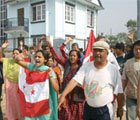 they were moving to Thamel from Gongabu; over 12 including Tek Bahadur Chokhayal of NC arrested from Maitidevi and over two dozen protestors including Tirthaman Dangol and Ghanashyam Poudel were arrested from Mahabouddha.
They were scheduled to organize a condolence meet at Tundikhel—a prohibited zone to pay tributes to martyrs of the on-going movement.
Three demonstrators have been killed in the protest programme launched by the SPA from April 6.
Local authorities in Kathmandu and Lalitpur districts issued prohibitory orders, barring public assemblies and rallies within the Ring Road area from April 4 ahead of planned four-day general strike of SPA beginning April 6.
Police also entered the Bhaktapur campus hostel and arrested five people, reports said.
Pro-democracy activists continued their agitation against the government demanding restoration of full democracy in Kathmandu and other parts of the country on Wednesday as well.
According to latest reports, protestors carried out rallies in different parts of the capital including Gongabu, Sitapaila, Chabhil, Patan and Kirtipur areas.
Police arrested more then 20 professors including chairman of Nepal University Teachers Association (NUTA) from a protest programme organized by NUTA in Tri-Chandra Campus.
Likewise, police also intervened a rally organized by writers at Old Baneshwore and took into custody over 25 writers.
Protestors also clashed with police in Thamel and Bhedasingh area as well.
Local authorities lifted the day-time curfew imposed in Kathmandu and Lalitpur from Wednesday.
Protestors carried out demonstrations in various districts of the country including Narayangadh, Chitwan, Tanahu, Dang, Biratnagar, Pokhara, Chitwan, Butwal among others.
Meanwhile, police arrested a group of rights activists, collecting money for the fund established for the treatment of injured people in the ongoing protest from Baghbazar area of the capital.
According to newspaper reports, over 300 protestors were injured across the country on Tuesday, while defying curfew orders imposed by local authorities.
Subscribe to:
Posts (Atom)